Source Moringa Leaf Extract for Capsules, Tablets, and Powders
Find 30 verified suppliers of moringa leaf extract for health care products, food, and cosmetics. Compare specifications like 10:1 and 20:1 ratios, packaging options, and certifications to identify the right raw material for your manufacturing needs; compare the available evidence and request quotations based on your requirements.
Key considerations
Products List


Comprehensive Sourcing Guide
Moringa Leaf Extract Sourcing Guide
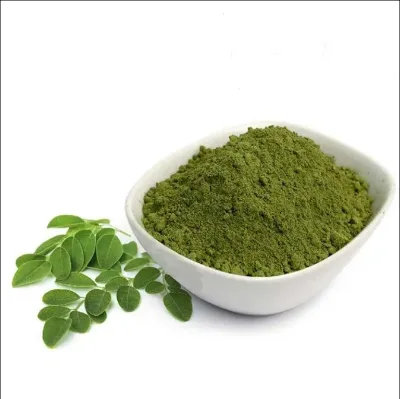
Buyers must first distinguish between the various physical forms available in the market, as the supply chain offers both fine green powders and brown extracts with different processing histories. The observed listings indicate that the product appears as a green fine powder or brown fine powder, with mesh numbers typically ranging from 80 to 120 mesh to ensure consistent particle size for downstream manufacturing. This variation in appearance often correlates with the specific extraction ratio, which is frequently cited as 10:1 or 20:1, directly influencing the concentration of active ingredients and the final cost structure.
Procurement teams should verify the intended application form before selecting a specific batch, as the product is listed for use in capsules, tablets, pastes, lotions, and even injectables. While the raw material is consistently identified as the leaf of the Moringa Oleifera tree, the extraction process varies between solvent extraction and physical methods, which dictates the solubility profile and purity. Understanding these distinctions is critical because a powder intended for food fortification may not meet the stringent sterility or solubility requirements needed for pharmaceutical injection applications.
Product Scope and Observed Listing Signals
The market data reveals a distinct price range between 0.95 and 60 USD, reflecting significant variance based on the extract ratio, purity level, and packaging configuration. Buyers should note that the minimum order quantity (MOQ) is flexible, ranging from a single unit for sampling up to 200 units for initial commercial trials, allowing for low-risk entry into the supply chain. This wide price spread suggests that the 0.95 USD tier likely represents raw powder or lower concentration extracts, while the higher end of the spectrum corresponds to highly concentrated, standardized extracts with rigorous quality assurance.
Sourcing signals also highlight the availability of free samples, typically ranging from 10 to 20 grams, which serves as a vital tool for verifying the physical characteristics of the green or brown powder before committing to bulk orders. The product origin is consistently traced to Shaanxi, Xi'an, China, a region known for its agricultural output of Moringa trees. However, buyers must treat the specific price points and sample availability as dynamic market conditions rather than fixed guarantees, as these figures can fluctuate based on seasonal harvest yields and global demand for health care products.
Technical Specifications to Verify
Verification of the extract ratio is paramount, as the standard specifications observed in the market are 10:1 and 20:1, defining the amount of raw leaf required to produce one unit of extract. Buyers must confirm that the assay method aligns with their quality control protocols, with HPLC, UV, GPC, and HPLC-MS all appearing as valid testing methods in the provided data. The solubility profile is another critical technical parameter, with some listings claiming 100% water solubility, which is essential for formulating liquid health foods or beverages without sedimentation issues.
The physical state of the product is consistently described as a fine powder, yet the color can vary from green to brown depending on the extraction type and drying process. Procurement teams should explicitly request the mesh number confirmation, as the observed range of 80 to 120 mesh ensures the powder flows correctly in automated filling machinery for capsules and tablets. Additionally, the lifetime of the product is stated as two years under normal storage conditions, but buyers must validate this claim against their specific storage environment to prevent degradation of the active Moringa leaf ingredients over time.
Compliance and Safety Documentation
A robust compliance framework is non-negotiable, as the observed certifications include HACCP, FDA, ISO, RoHS, BRC, and various food safety standards like ISO22000. Buyers must ensure that the Certificate of Analysis (CoA) is available for every shipment, as this document provides the definitive proof of the product's identity, purity, and absence of contaminants. The presence of multiple certifications such as Halal and Kosher indicates a broad market readiness, but the specific certificate required for the target market must be verified against the supplier's current documentation to avoid regulatory delays.
Safety documentation must also address the grade of the product, which is listed as Food Grade, though some applications may require higher pharmaceutical standards. The H.S. Code 2932999099 is provided for customs classification, but buyers should cross-reference this with local import regulations to ensure accurate duty assessment. Furthermore, the packaging material, which includes aluminum foil bags and 25kg drums, must be inspected to confirm it meets the necessary barrier properties to protect the powder from moisture and light, preserving the integrity of the active ingredients during transit.
Cost Drivers and Commercial Terms
The final cost of the Moringa leaf extract is heavily influenced by the extraction ratio and the complexity of the packaging requirements. While the base price range is observed between 0.95 and 60 USD, the specific unit price will escalate with higher extract ratios like 20:1 and specialized packaging such as aluminum foil bags versus standard drums. Buyers should anticipate that custom packaging requests, which are noted as available, will incur additional charges and potentially extend the lead time beyond the standard production cycle.
Commercial terms must be negotiated with a clear understanding of the minimum order quantity, which can be as low as one unit for sampling but scales up to 200 units for standard orders. The availability of free samples allows buyers to validate the product quality without incurring significant material costs, but the logistics of shipping these samples should be factored into the overall procurement budget. Additionally, the lifetime of the product is two years, which impacts inventory planning and cash flow, as buyers must ensure they can sell or utilize the stock within this window to avoid spoilage and financial loss.
Supplier Qualification and Quality Control
Supplier qualification requires a deep dive into their extraction process, which is listed as either solvent extraction or physical methods, each carrying different implications for residual solvents and final purity. Buyers should request detailed information on the raw material source, confirming that the plants are sourced from the specified Shaanxi region and that the part used is strictly the leaf. The consistency of the product, indicated by the standard 10:1 or 20:1 ratios, must be maintained across batches, requiring the supplier to demonstrate a robust quality control system that includes regular HPLC and UV testing.
Quality control protocols must also encompass the storage method, which is listed as normal, but buyers should define what constitutes "normal" in their specific supply chain context to prevent degradation. The availability of a Certificate of Analysis (CoA) is a baseline requirement, but advanced buyers should insist on third-party testing results to verify the active ingredients and ensure the product meets the specific assay methods like HPLC-MS. This rigorous approach ensures that the supplier can consistently deliver a product that meets the stringent requirements of health care, food, and cosmetic applications.
Long-Term Procurement Checks
Establishing a long-term partnership requires regular audits of the supplier's ability to maintain the two-year product lifetime and consistent mesh number specifications. Buyers should implement a schedule for periodic re-testing of the Moringa leaf extract to ensure that the active ingredients have not degraded during storage or transit. The flexibility of the supplier to accommodate custom packaging requests and varying extract ratios is a key indicator of their capacity to support evolving market demands and new product formulations.
Continuous monitoring of the supplier's certification status is essential, as certifications like HACCP, FDA, and ISO are dynamic and require regular renewal. Buyers must verify that the supplier maintains these credentials throughout the contract period to ensure ongoing compliance with international trade regulations. Finally, the supply chain resilience should be assessed by evaluating the supplier's ability to handle fluctuations in raw material availability from the Shaanxi region, ensuring that the procurement of this vital health care ingredient remains stable and uninterrupted.
FAQs
What forms and extract ratios are available for moringa leaf extract?
Moringa leaf extract is typically supplied as a fine powder in green or brown color, with extract ratios of 10:1 and 20:1 as well as raw powder options. The powder is usually processed to 80-120 mesh size for consistency. Buyers can specify the ratio and mesh based on their formulation needs for capsules, tablets, food, or cosmetics.
Can moringa leaf extract be customized for my application?
Yes, customization is available from listed offerings. The extract is applied in health care products, food, medicine, and cosmetics, with application forms including capsules, tablets, and other formats. Buyers can discuss required extract ratio, mesh size, packaging, and labeling with suppliers, though minimum order quantities and customization lead times vary by supplier and should be confirmed directly.
What certifications do moringa leaf extract products typically carry?
Listed products carry certifications such as HACCP, FDA, ISO, RoHS, BRC, Halal, Kosher, ISO9001, and ISO22000, depending on the supplier. Food grade material is also specified for some offerings. Certification coverage differs by listing, so buyers should request current certificates and verify scope before placing orders, especially for regulated food or supplement applications.
How is moringa leaf extract tested and verified for quality?
Quality is verified through assay methods including UV, HPLC, GPC, and HPLC-MS, with HPLC and TLC listed as test methods. A certificate of analysis is available for the products. Buyers should request a CoA for each batch, confirm the tested parameters match their specification, and consider third-party testing for critical applications such as health care products.
What packaging and storage conditions apply to moringa leaf extract?
Standard packaging is 25kg per fiber or plastic drum, or aluminum foil bags, with 1kg foil bag options available and custom packing on request. Storage uses normal conditions with a shelf life of 2 years. Buyers requiring smaller quantities or private labeling can request alternative packaging, which may affect pricing and minimum order requirements.
Can I get free samples before ordering moringa leaf extract?
Yes, free samples of 10g to 20g are offered on some listings, allowing buyers to evaluate appearance, solubility, and quality before committing. Since the powder is stated as 100% water soluble, sample testing can confirm performance in your formulation. Contact suppliers to arrange samples and clarify whether shipping costs apply before placing a bulk order.
Where is moringa leaf extract sourced from and how is it produced?
Listed products originate from Shaanxi, Xi'an, China, a major hub for botanical extracts. Production uses solvent extraction with a physical extraction process, and the leaf is the part used, with the Latin name Moringa oleifera Lamarck. Buyers should confirm processing details and raw material traceability with each supplier when quality provenance matters.
What are the typical minimum order quantities and price ranges?
Listed minimum order quantities range from 1 to 200 units, and prices span roughly 0.95 to 60 US dollars, reflecting differences in extract ratio, grade, and pack size. Raw powder at lower ratios generally costs less than concentrated 20:1 extracts. Buyers should compare quotes against specification, certification, and packaging before selecting a supplier.